Roofing in Elm Park: What Homeowners Should Check Before an Older Roof Starts Leaking
Most people do not think much about their roof when it is doing its job properly.
It sits above the house through winter rain, summer sun and strong winds without demanding much attention.
Then one day a stain appears on the bedroom ceiling.
Suddenly the roof becomes the most important part of the property.
For homeowners in Elm Park, a little attention before that point can save a lot of inconvenience.
This is especially relevant to properties where the roof covering has been in place for many years and has gradually accumulated minor repairs, replacement tiles and patches around chimneys or extensions.
The aim is not to replace a roof simply because it is older.
The aim is to understand its actual condition.
Age Does Not Tell the Whole Story
Two roofs installed at roughly the same time can age very differently.
One may still be performing well, while another has developed several weak points.
Roof pitch, material quality, exposure to wind, maintenance history and previous workmanship all affect how long a roof remains reliable.
A roof partly sheltered by neighbouring buildings may experience different weather conditions from one on an exposed corner.
The way the loft is ventilated can also affect timber and underlay.
So instead of asking, “How old is my roof?”, it is often more useful to ask, “What condition is each part of the roof in?”
Start With the Tiles or Slates
The main roof covering takes the direct impact of the weather.
From ground level, look for tiles that appear cracked, displaced or out of line with their neighbours.
Colour differences can also reveal previous patch repairs.
A different-looking tile is not automatically a problem, but it may tell you that the roof has needed attention before.
With slate roofs, individual slates can slip if fixings fail.
With tiled roofs, cracking and movement may become more noticeable around edges, hips and valleys.
Do not try to walk on the roof yourself to investigate.
Roof coverings can be fragile and working at height carries obvious risks.
The Roof Edge Is Easy to Ignore
The lower edge of the roof contains several components that need to work together.
Tiles or slates direct water into the gutters.
Fascias support the guttering.
Soffits close the underside of the eaves and may form part of the ventilation system.
When guttering is blocked, water can overflow onto fascia boards and walls.
If timber fascias remain damp repeatedly, they may begin to decay.
Loose gutters can then sag or pull away.
Homeowners often focus only on the top surface of a roof, but the roofline deserves just as much attention.
Check Gutters During Rain
One of the easiest roofing checks can be done from inside your home or garden while it is raining.
Watch the gutters.
Water should travel along them towards the outlets rather than spilling over the edges.
Overflow often indicates a blockage.
Leaves, moss and roof debris can all build up inside guttering.
If one section always overflows even after cleaning, the gutter may be poorly aligned or sagging.
Downpipes should also carry water away properly.
Persistent water discharge onto a wall or around the base of a property deserves investigation.
Flat Roofs on Extensions and Garages
Many Elm Park homes have later additions such as rear extensions, porches or garages with flat roofs.
These roofs need slightly different checks from pitched roofing.
Look for signs of standing water that remains long after rain.
Blisters, cracks, lifted edges and damaged seams can also indicate deterioration depending on the roof material.
The junction where the flat roof meets the main building is particularly important.
Flashing and upstands need to prevent water from entering where two different surfaces meet.
A flat roof that has developed one local defect may be repairable.
Widespread cracking or repeated leaks may indicate that replacement is more practical.
What Is Happening Around the Chimney?
Chimney stacks are exposed to rain and wind from every direction.
Mortar joints can weather.
Lead flashing can become damaged.
The flaunching around chimney pots may crack.
Because the chimney passes through the roof covering, water has several possible routes into the building if surrounding details fail.
Internal damp around a chimney breast should therefore be properly diagnosed rather than automatically blamed on condensation or an internal plumbing issue.
Sometimes the problem is small and limited to one flashing section.
Sometimes the stack itself needs repointing or other repair.
Roof Ventilation Matters More Than It Looks
A damp loft does not always mean rainwater is entering through the roof.
Condensation can produce similar symptoms.
Warm, moist air from the house can rise into a colder roof space. If ventilation is inadequate, moisture may settle on underlay, timbers and other cold surfaces.
Homeowners may notice droplets, mould or damp insulation.
This is particularly relevant after insulation upgrades where airflow has accidentally been restricted.
Before assuming the roof covering is leaking, it is important to establish whether the moisture appears after rainfall or under particular temperature conditions.
A roofing inspection can help distinguish the two.
Don’t Keep Patching the Same Place
Occasional roof repairs are normal.
Repeated repairs to exactly the same area are different.
If water keeps returning near a chimney, valley or roof junction, something more fundamental may be wrong with the detailing.
Adding more sealant each year can hide the symptom temporarily without correcting the cause.
The same applies to flat roofs.
Repeatedly patching one section of an old covering may stop making financial sense once failures begin appearing across a wider area.
Keeping a note of previous roofing work can be useful when deciding what to do next.
When Might a New Roof Be Worth Considering?
Complete replacement is a significant project and should be based on the overall condition of the roof.
It may become appropriate when defects are widespread, the covering has reached the end of its useful life or previous repairs are no longer providing reliable protection.
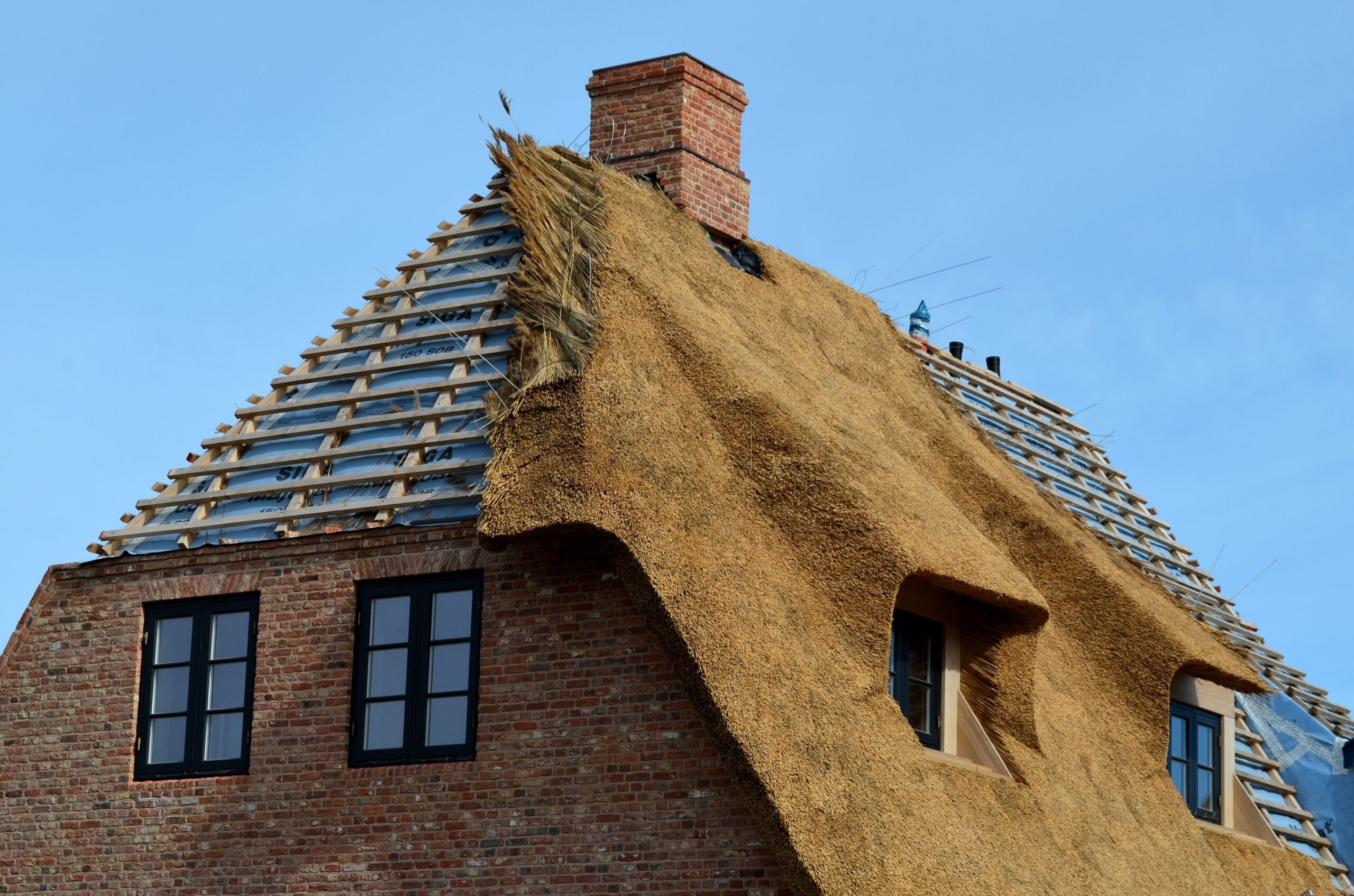
During replacement, the old covering is removed so the underlying structure, battens and membrane can be inspected.
This can reveal problems that are not visible from outside.
A new roof also gives the opportunity to consider ventilation and insulation details as part of the wider roofing system.
However, a roof with one isolated damaged section does not automatically need replacing.
Assessment comes first.
Watch for Internal Warning Signs
The house itself may tell you when the roof needs attention.
Typical signs include:
damp marks on ceilings,
peeling paint near the top of walls,
musty smells in the loft,
dark staining on roof timbers,
wet insulation,
water around chimney breasts,
and drips during heavy rain.
The timing can be useful.
If a stain only appears during wind-driven rain, it may indicate a defect on a particular side of the roof.
If moisture is present mainly during cold weather regardless of rain, condensation may need to be considered.
These details can help narrow down the cause.
After a Roofing Inspection
A good inspection should lead to a clear recommendation.
That might be a small repair.
It might involve replacing damaged flashing, clearing drainage or fixing ridge tiles.
For an older roof in poor condition, the advice may be to plan for more extensive work.
The important point is understanding why that recommendation is being made.
Homeowners should know what has failed, how urgent the problem is and whether surrounding areas are still serviceable.
Romford Roofing Services works on roof repairs, new roofs, maintenance, guttering and related roofing issues in and around Romford and East London.
If your Elm Park property has an older roof, there is no need to assume the worst simply because of its age.
But if you have started noticing slipped tiles, recurring damp or overflowing gutters, it is worth finding out what is happening before the next period of heavy rain makes the decision for you.

Related Posts
Roof Repairs in Collier Row: Small Problems That Are Worth Dealing With Early
A roof rarely goes from perfectly sound to seriously damaged overnight. More often, the warning

Gutter, Fascia and Soffit Repairs in Seven Kings: Protecting the Edge of Your Roof
The roof covering receives most of the attention when homeowners think about weather protection.

New Roof Installation in Chadwell Heath: Signs an Older Roof May Need Replacing
A roof is exposed to rain, wind, frost, sunlight and changing temperatures throughout the